-.-
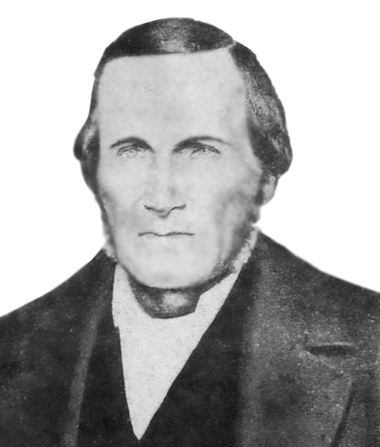
William Wolfskill
1798-1866William Wolfskill crossed the Mojave Desert in the winter of 1830-1831 while leading a trapping expedition from New Mexico to California. Traveling with George C. Yount and about twenty other men, he reached the Los Angeles area in February 1831. Their journey helped establish the northern alignment of the Old Spanish Trail, which became an important trade route between New Mexico and California.
Born in Madison County, Kentucky, on March 20, 1798, Wolfskill grew up largely on the Missouri frontier. In 1822 he traveled to Santa Fe with William Becknell's second trading expedition. During the following years, he trapped beaver, traded livestock, and traveled through New Mexico and northern Mexico. He also worked with Ewing Young, whose trapping ventures eventually carried him into California.
Across the Mojave
In September 1830, Wolfskill's party left New Mexico for California. According to H. D. Barrows, the men intended to trap in the Tulare and Sacramento valleys, but winter conditions forced them south. Their journey carried them through present-day Colorado and Utah before they descended toward the deserts.The party reached the Mojave villages along the Colorado River near present-day Needles. From there, they crossed the desert, followed the Mojave River corridor, and passed through Cajon Pass toward the Southern California settlements. These trails connected watering places that Native travelers had known and used long before the trappers arrived.
Wolfskill did not open the first commercial route between New Mexico and Los Angeles. Antonio Armijo had completed that journey in 1829-1830. Wolfskill and Yount helped establish a more northerly alignment that became the principal route of the Old Spanish Trail. Their visit to the Mojave villages, however, should not be taken as the course followed by every later caravan. Traders used several desert approaches that connected with the Mojave River.
The Old Spanish Trail developed from Native paths and earlier exploration routes. Pack caravans carried blankets, serapes, and other woolen goods west from New Mexico. Traders returned east with horses and mules purchased from California ranches.
From Trapper to Grower
After reaching California, Wolfskill tried sea otter hunting. According to Barrows, he and several companions built a schooner named Refugio at San Pedro and hunted along the Baja California coast. The venture brought limited success.Wolfskill gradually turned to vineyards and orchards. In March 1838, he moved onto the Los Angeles property that became his longtime home. In January 1841, he married Magdalena Lugo. That same year, he planted an orange orchard that helped establish California's commercial citrus industry.
His interests also extended north. On May 24, 1842, Governor Juan Bautista Alvarado granted him Rancho Rio de los Putos along Putah Creek, in present-day Yolo and Solano counties. His brother John settled and developed the ranch. William transferred half the property to John in 1849 and the remainder in 1854.
Wolfskill died in Los Angeles on October 3, 1866. His life connected the Santa Fe trade, the trapping frontier, the Mojave crossing, and the growth of California agriculture. In Mojave history, his importance rests chiefly on the 1830-1831 expedition and its place in the development of the Old Spanish Trail.
References
Barrows, H. D. "William Wolfskill, the Pioneer." Annual Publication of the Historical Society of Southern California and of the Pioneers of Los Angeles County, vol. 5, no. 3, 1902, pp. 287-294.Camp, Charles L., editor. George C. Yount and His Chronicles of the West. Old West Publishing Company, 1966.
Hafen, LeRoy R., and Ann W. Hafen. Old Spanish Trail: Santa Fe to Los Angeles. Arthur H. Clark Company, 1954.
National Park Service. "Old Spanish Trail Timeline" and "History & Culture," Old Spanish National Historic Trail.
Old Spanish Trail Association. "William Wolfskill."
University of California Agriculture and Natural Resources. "The Wolfskill Grant."
Wilson, Iris Higbie. William Wolfskill, 1798-1866: Frontier Trapper to California Ranchero. Arthur H. Clark Company, 1965.
Also see:
William Wolfskill and the Spanish Trail
However, it was an 1830 expedition led by William Wolfskill that was to have a major impact on the desert area, for in that year Wolfskill pioneered the famous ...Old Spanish Trail
William Wolfskill and George C. Yount first established the Northern Route of the Old Spanish Trail as they passed through central Utah in 1831. With a party of ...Timeline of History of the Mojave Desert
1831 George Yount and William Wolfskill in 1831 arrived with a half-starved party of 20 men at the Mojave villages and are helped by the Mojaves. 1835 Lt.Chronology of expeditions between New Mexico and California
Wolfskill and Yount and 20 trappers leave New Mexico in September 1830 and arrive in California in February 1831. They apparently followed portions of the ...Lane Gets New Nieghbors - Mojave Desert
One of the stockmen, William Wolfskill, whose familiarity with the Spanish Trail extended back to 1830, had traveled the Mojave River valley in the summer of ...Independence - Mojave Desert
The independent or free trapper under William Wolfskill in 1830 1831, for example, received five dollars for each beaver pelt; but he had to pay $2.50 for a share ...Mojave Indian History - Explorers
Likewise, when George Yount and William Wolfskill in 1831 arrived with a half- starved party of 20 men at the Mojave villages after a treacherous midwinter trip ...American Explorers in the Mojave
Wolfskill, William He spent ten years trapping in the New Mexico area, where in 1828 he was made a Mexican citizen. Eventually, he moved west to Los Angeles ...Old Skeletons and New Trails
William Wolfskill and the Spanish Trail. Other American trappers also began using the desert route during the late 1820s, launching .Captain Lane Appointed Judge of the Plains - Mojave Desert
John Rowland, Robert Carlisle, William Wolfskill and Ygnacio Palomares are some of the figures that the Judges of the Plains would have worked with, men who ...A History of Zzyzx: 1776-1830 Early Explorers - Mojave Desert
The Ewing Young and Yount-Wolfskill group was among those guided by frontier scout Kit Carson. > Next >, Looking across Soda Lake toward Soda Springs ...James Ohio Pattie - Mojave Desert
including Ewing Young and William Wolfskill working the tributaries of the Colorado River in 1824, and James and Sylvester Pattie on the Gila River in 1828.Other Movements through the Mojave - Mojave Desert
He might have been an employee or free trapper under William Wolfskill and George Yount, who after talking to Jedediah Smith and Arthur Black about ...This Other Ilustrious Group - Mojave Desert
... Thomas "Peg-leg" Smith; one of Williams Sublette's brothers; William Wolfskill; Antoine Leroux; and Manuel Rubidoux, who had the bulk of his French trappers ...Isaac Slover - Mojave Desert
Slover is known for his association with many other trappers in the American Southwest, including Ewing Young and William Wolfskills working the tributaries of ...